
Prudence / Deliverables / Report anatomy

What the work actually looks like.

Technical reporting should show the chain from field condition to criterion to action. The examples below are anonymized from a completed healthcare emergency-equipment assessment; client and room identifiers have been removed.

Anonymized field example

Nine findings. Every one tied to an action and a way to close it.

The assessment documented inadequate eyewash flow, flushing-fluid temperatures outside the tepid range, discolored water, corrosion and restricted access. The report did not stop at the observation; it carried each issue through corrective action and reinspection.

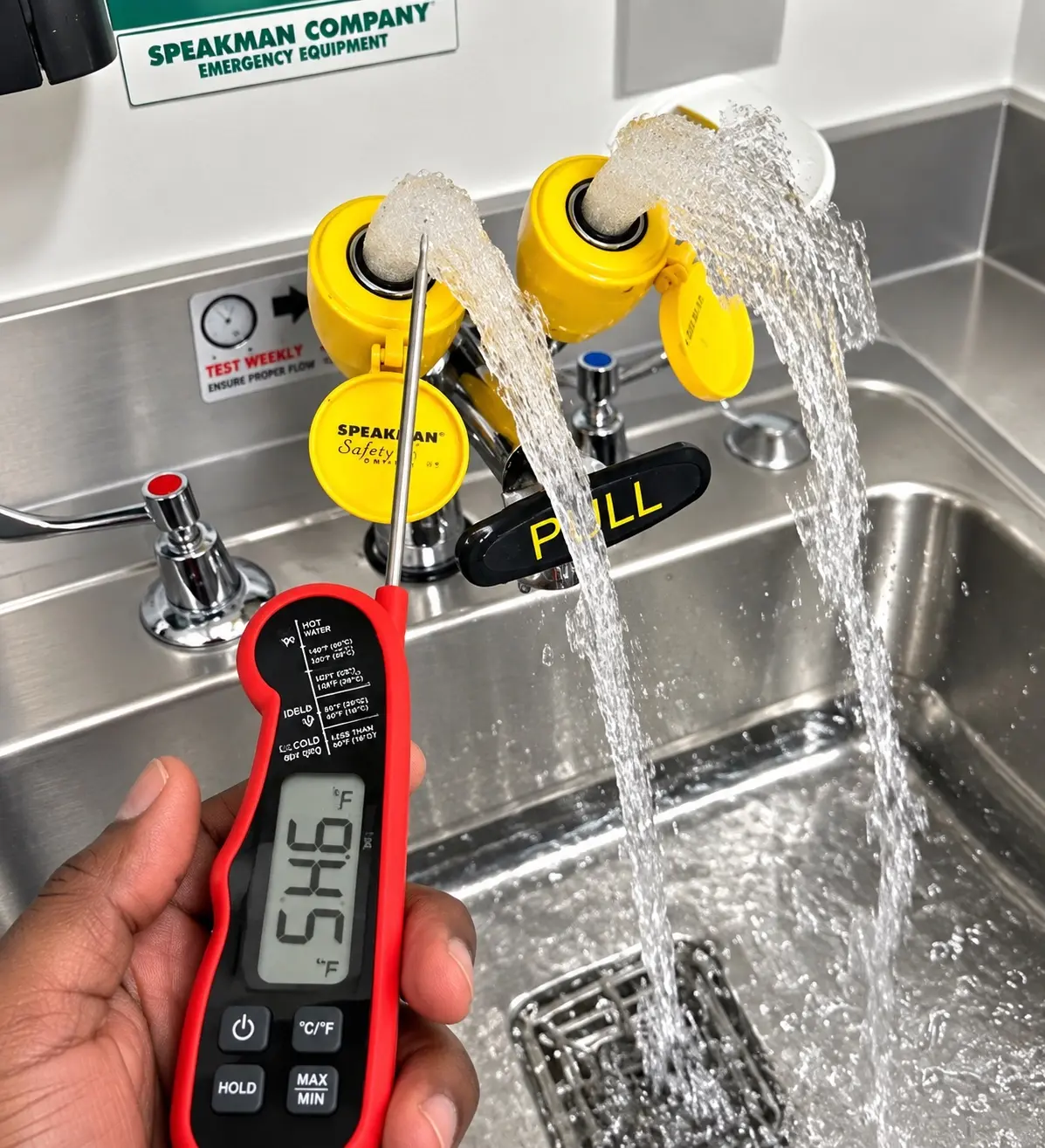
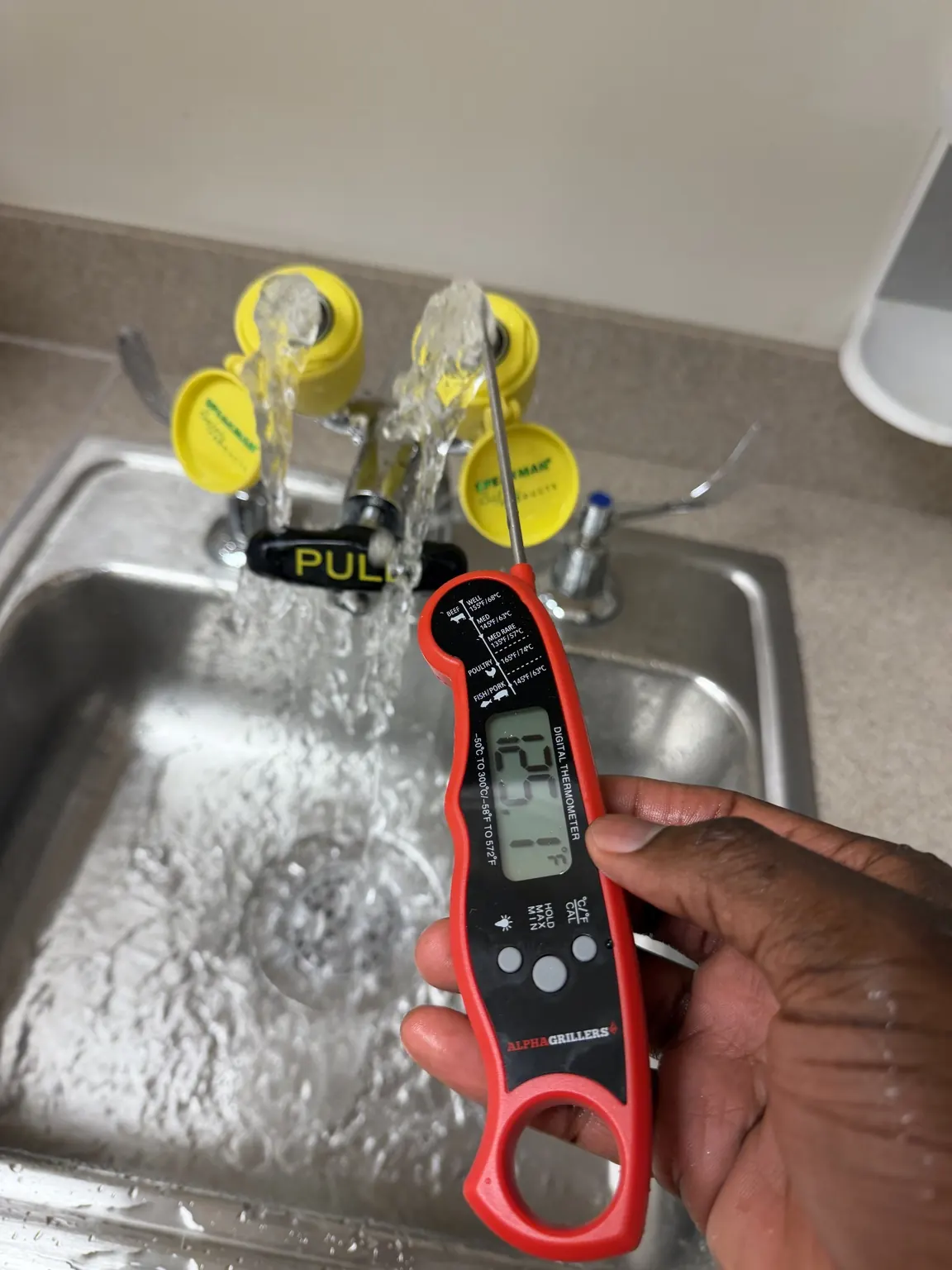
9corrective-action records<0.4 gpmdocumented eyewash flow44.5°Flow flushing-fluid temperature125°Fhigh flushing-fluid temperature
Temperature measurement being taken while an emergency eyewash is operating
Temperature verification during an operating eyewash test.
Emergency eyewash operating while flushing-fluid temperature is checked with a digital thermometer
Field measurements are documented while the equipment is operating, not inferred later.

Report anatomy

The evidence trail stays visible.

These excerpts mirror the structure used in the completed assignment. Identifiers are removed, but the field logic and measured values are retained.

01

Executive summary

The reader sees the scale and the consequential issues before entering the station-by-station detail.

EXECUTIVE SUMMARY

An annual inspection review identified nine station records requiring corrective action. The most consequential findings involved inadequate eyewash flow, flushing-fluid temperatures outside the tepid range, discolored flushing water, corrosion and restricted access.
02

Observed condition

Measurements and operating conditions are written plainly so the finding can be understood without decoding the report.

OBSERVED

Combination eyewash / safety shower

The eyewash produced discolored flushing water. Flow was documented below 0.4 gpm, flushing-fluid temperature was 44.5°F, and acceptable simultaneous flushing of both eyes was not achieved.

03

Criterion + significance

The measured condition sits next to the basis for action. The reader should not have to hunt for why the number matters.

MEASURED CONDITION
Flushing-fluid temperature125°F
Evaluation basisANSI/ISEA Z358.1 tepid-water criteria
StatusCorrective action required
04

Corrective action

The report tells the client what to investigate, what to correct and what must be verified afterward.

RECOMMENDED CORRECTIVE ACTION

Evaluate the hot/cold water mixing or tempering system and correct the condition so the eyewash consistently supplies tepid flushing fluid. Recheck and document an acceptable temperature after repair before closing the finding.

05

Closeout

Findings are carried into a tracking table so responsibility and verification do not disappear after the report is issued.

CORRECTIVE ACTION TRACKING
IssueElevated flushing-fluid temperaturePriorityHighResponsible partyAssigned by clientCloseoutReinspection required

AtmosFlow in practice

Measurements, organized for review.

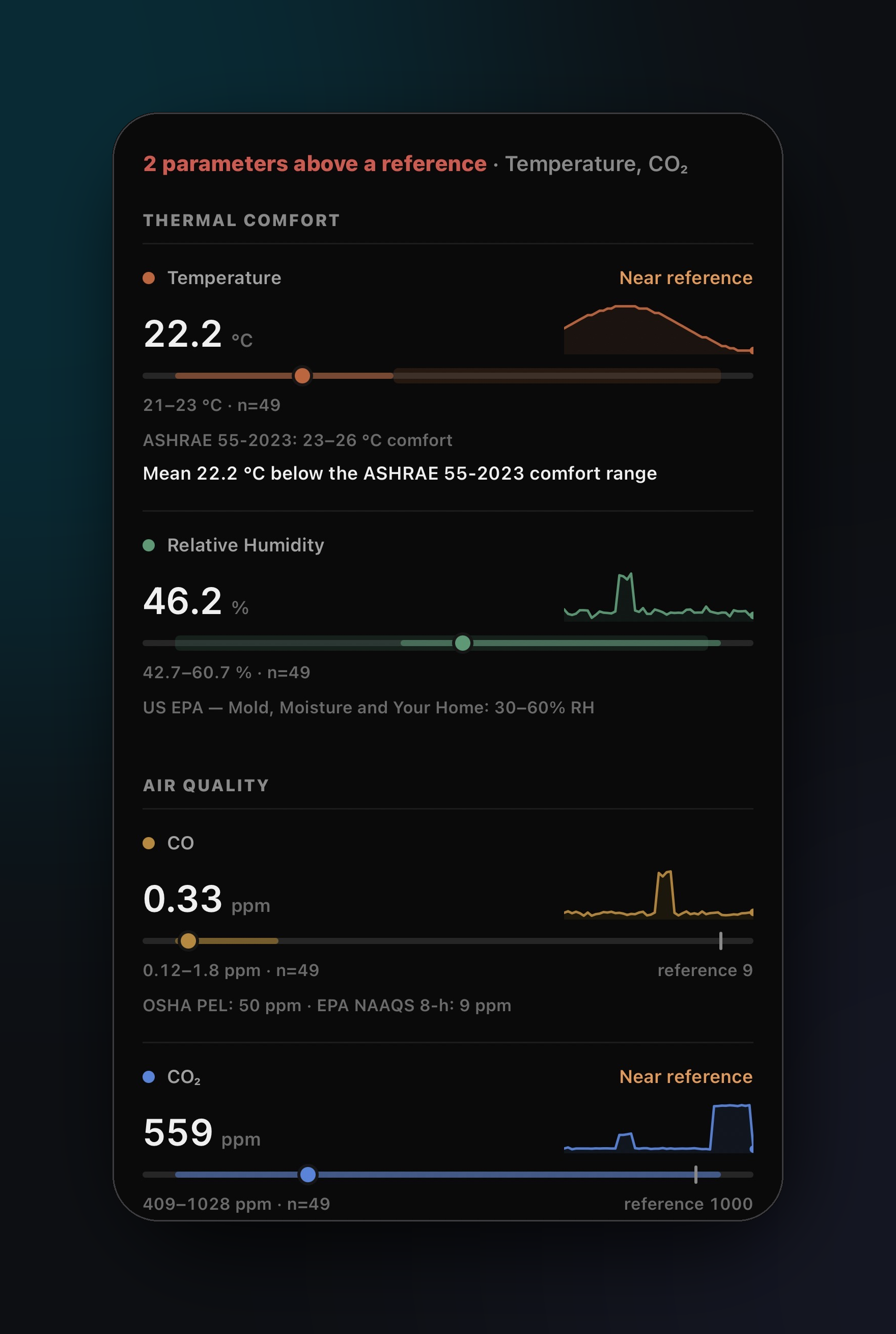
A focused view of the monitoring record helps clients understand what was measured before reviewing the interpretation and recommended actions.

AtmosFlow interface showing temperature, relative humidity, carbon monoxide and carbon dioxide measurements
AtmosFlow · Indoor environmental measurements in one structured view

Full specimen

Want to see the whole deliverable?

Request a redacted specimen to review the level of detail, corrective-action language and closeout structure before engaging us.

Request a specimen report
CallGet a quote