Listen and investigate
Review complaint patterns, building history, ventilation, and possible sources.

Persistent odors, stuffy rooms, or occupant complaints? We investigate building conditions and help your team decide what to do next.
We confirm the scope, location, and appropriate specialist support before scheduling.

Review complaint patterns, building history, ventilation, and possible sources.
Select measurements, continuous logging, or laboratory sampling around the question.
Explain findings, limitations, corrective options, and what should be rechecked.
A clear record your facilities, operations, or EHS team can use.
Our report example shows how field observations become findings, recommendations, and a way to verify completion.
The problem
Occupants may report headaches, irritation, odors, fatigue, temperature problems, respiratory concerns, or symptoms that appear primarily in one room, floor, or building. The same complaint can have very different causes, and a normal reading for one parameter does not rule out a different building or exposure issue.
Prudence treats the building as a system. We look for patterns across complaint history, occupancy, HVAC operation, moisture, pressure relationships, potential sources, and environmental measurements so the investigation can move from “something is wrong” to a defensible explanation of what is most likely contributing.
What can cause it
Insufficient outdoor air, poor distribution, blocked returns, incorrect schedules, inadequate exhaust, or pressure relationships that move contaminants between spaces.
Roof or plumbing leaks, condensation, wet materials, high humidity, or concealed water damage that can lead to material deterioration or microbial growth.
Cleaning products, office equipment, furnishings, renovation materials, combustion, maintenance activities, dust, and other chemical or particulate sources.
Traffic, loading areas, generators, construction, exhaust discharges, neighboring operations, or contaminants drawn through outdoor-air intakes.
How we investigate
We establish where and when complaints occur, what occupants report, what changed before the complaint began, and how the building and HVAC systems operate.
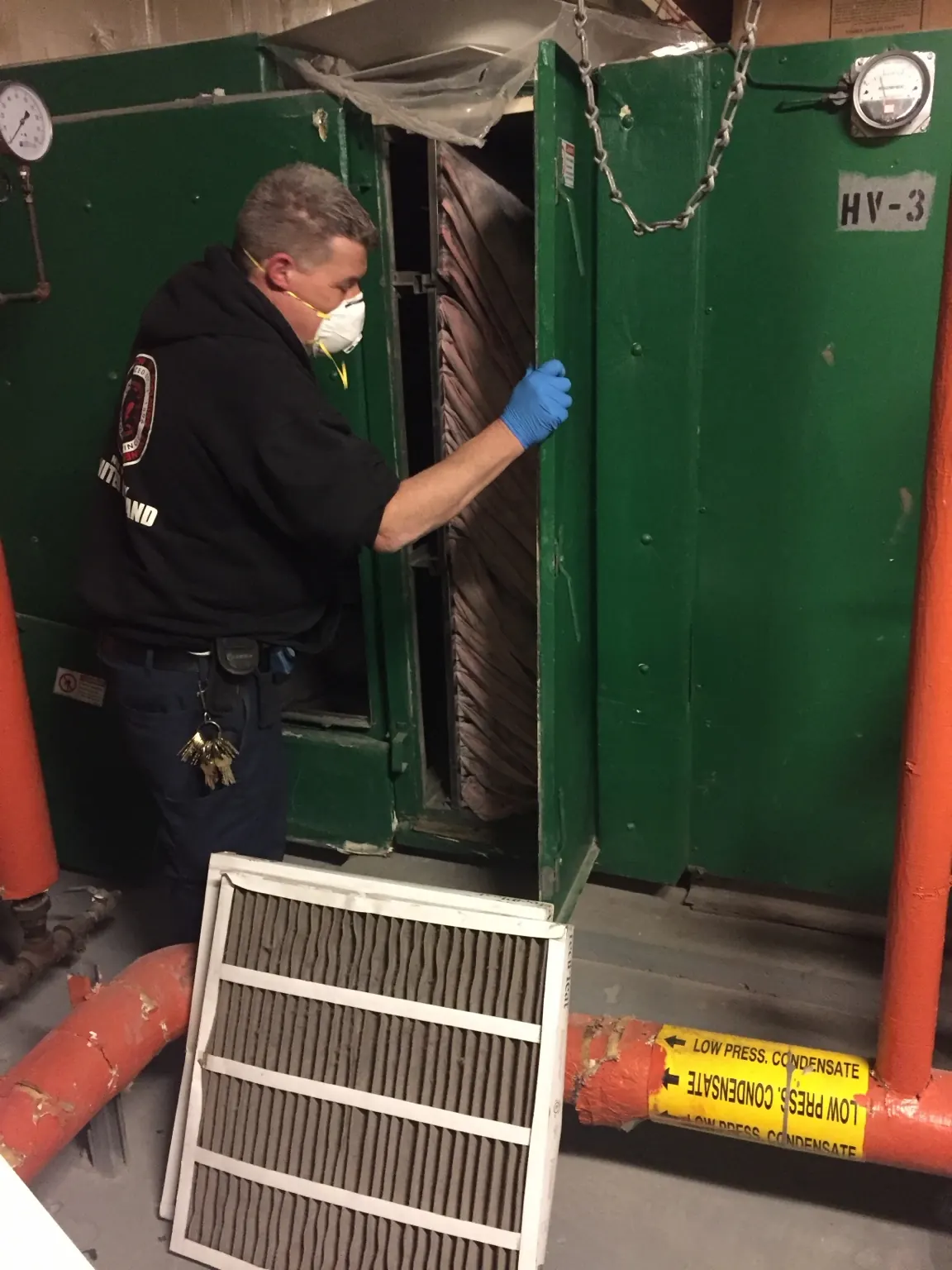
We evaluate occupied areas, mechanical spaces, outdoor-air intakes, supply and return pathways, housekeeping, moisture indicators, pressure relationships, and plausible contaminant sources.
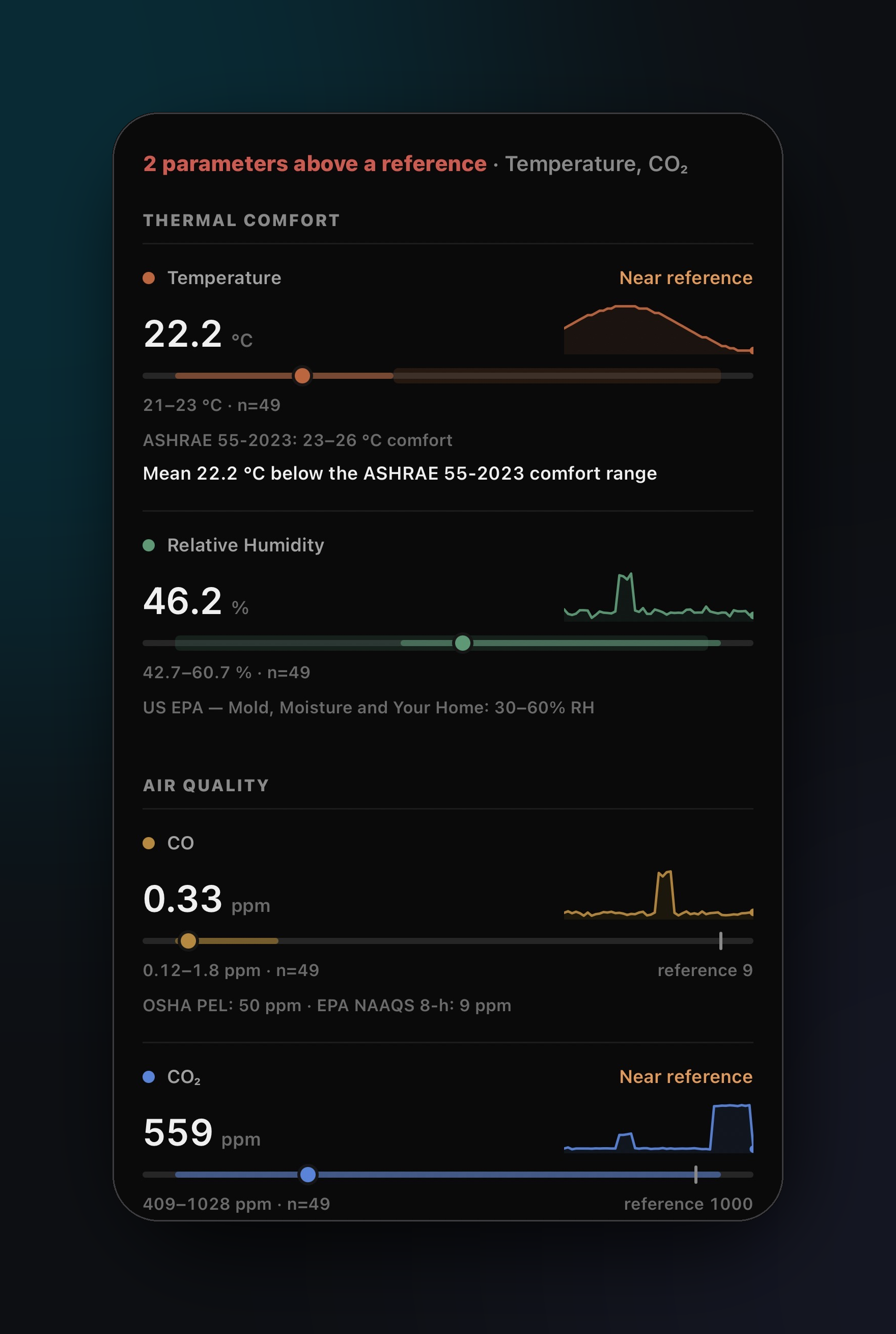
Depending on the question, measurements may include carbon dioxide, carbon monoxide, particulate matter, temperature, relative humidity, total VOC screening, formaldehyde, pressure, air velocity, moisture, or other targeted parameters.
Laboratory sampling is added when it can answer a specific hypothesis—for example, a particular VOC, formaldehyde, microbial concern, or another contaminant suggested by the history and walkthrough.
Regulations & guidance
OSHA states that it does not have a general indoor air quality standard. Depending on the condition, however, specific air-contaminant standards, ventilation requirements, substance-specific rules, or the OSH Act General Duty Clause may be relevant.
IAQ investigations also commonly rely on consensus standards and professional guidance. ASHRAE Standard 62.1 can inform ventilation evaluation, while EPA, NIOSH, and other technical references may be appropriate depending on the building and question. Prudence distinguishes regulatory requirements from consensus standards and recommended guidance in the report.
Corrective action
Recommendations may include correcting outdoor-air delivery, balancing supply and return airflow, improving filtration, repairing exhaust, changing HVAC schedules, isolating contaminant sources, adjusting pressure relationships, addressing moisture, relocating an intake, changing housekeeping or chemical practices, or conducting additional targeted testing.
The objective is not simply to say that a reading was “high” or “low.” It is to determine what the data and building observations mean together and what action is most likely to improve the condition.
Continuous monitoring
Short site visits capture a moment. Where conditions vary with occupancy, HVAC schedules, weather, or specific activities, Prudence can use continuous logging to characterize patterns in parameters such as CO₂, particulate matter, TVOCs, temperature, and relative humidity.
When included in the scope, environmental data can be organized and analyzed through the AtmosFlow IAQ platform to connect time-series measurements with field observations and reporting. The platform supports the investigation; professional judgment remains central to interpretation.
What you receive
Share the concern, facility location, and preferred timing. We will review the request and confirm the proposed scope and quote.