Access comes first. Emergency flushing equipment has to be immediately reachable from the hazard and the path cannot require a worker to navigate obstacles that would delay use. In practice, shelving, doors, storage and changes to room layout can quietly defeat an otherwise functional installation.
Flow and reach matter because the equipment has to deliver flushing fluid where the user needs it. For eyewashes, both eyes must be flushed simultaneously. For showers, the spray pattern and flow must support full-body emergency flushing. These are measured conditions, not visual impressions.
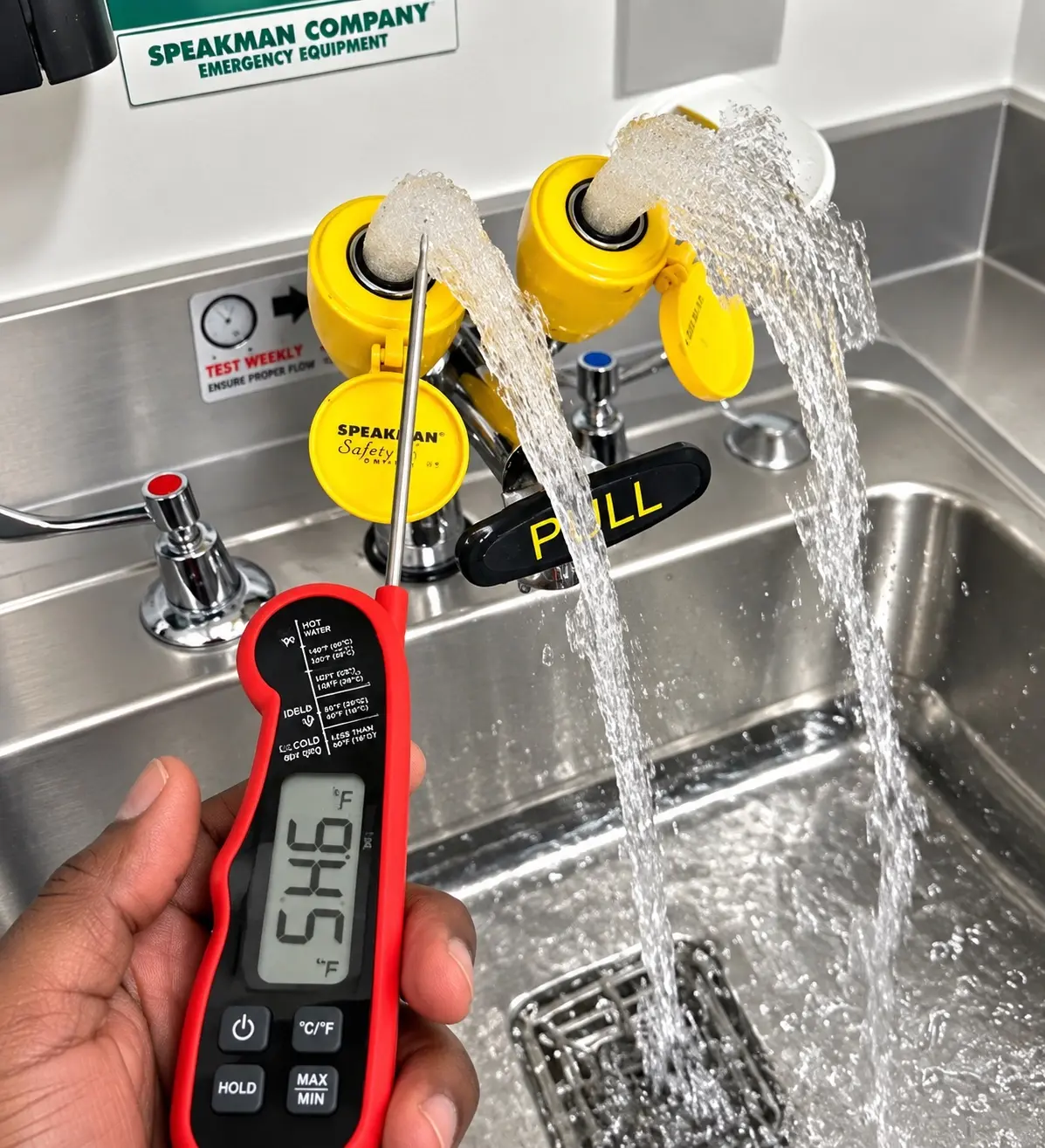
Flushing-fluid temperature matters as well. ANSI/ISEA Z358.1 uses the concept of tepid flushing fluid because water that is too cold or too hot can shorten the time a person is willing or able to remain under emergency flushing. The annual inspection should therefore verify more than activation.
Weekly activation and annual inspection serve different purposes. Routine activation helps clear stagnant water and confirm basic operation. The annual review is where access, flow, temperature, condition and other performance criteria are evaluated systematically.
The practical takeaway is simple: treat the station as an emergency control, not a plumbing fixture. The question is not “does it run?” The question is “will it perform when someone has seconds to act?”