Indoor air & ventilation
Odors, occupant symptoms, pressure concerns, water intrusion, construction dust, temperature or humidity complaints, and suspected contaminant migration.
Support occupied healthcare environments with practical exposure, emergency-equipment, and building-health assessments.
We confirm the scope, location, and appropriate specialist support before scheduling.
Our report example shows how field observations become findings, recommendations, and a way to verify completion.
Healthcare risk
Patient-care areas, laboratories, pharmacies, sterile processing, environmental-services closets, kitchens, loading areas, maintenance shops, mechanical rooms, and administrative space do not present the same hazards. A sound assessment begins by separating those environments and identifying who may be exposed, during which task, and by what route.
Odors, occupant symptoms, pressure concerns, water intrusion, construction dust, temperature or humidity complaints, and suspected contaminant migration.
Disinfectants, sterilants, laboratory chemicals, aerosols, waste anesthetic gases, noise, and other task-specific agents that may require monitoring or control review.
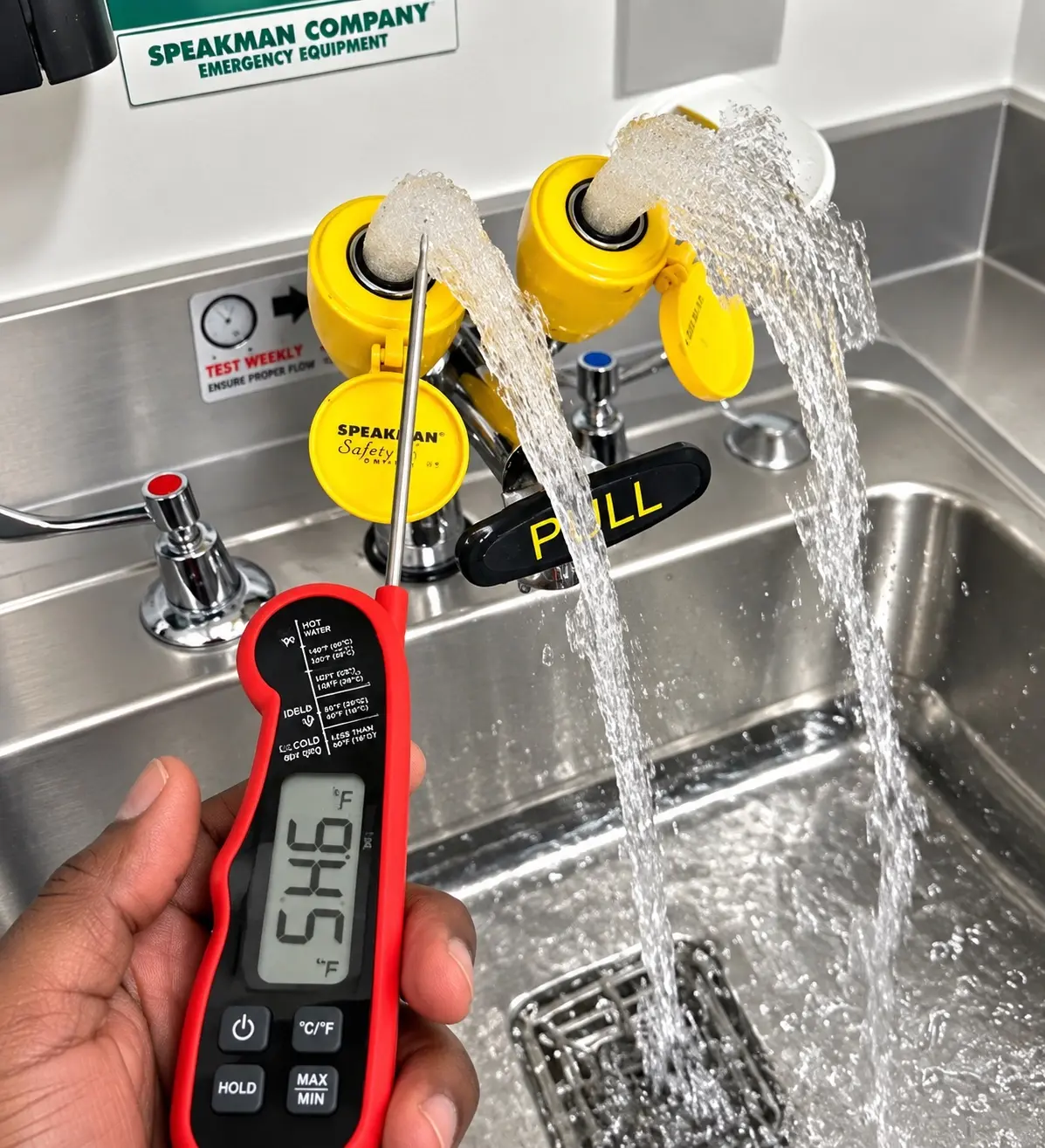
Eyewash and shower placement, access, flushing-fluid condition, temperature, flow, inspection records, and whether the equipment matches the chemical exposure scenario.
Bloodborne pathogens, Hazard Communication, PPE, respiratory protection, laboratory safety, written procedures, training, and corrective-action tracking.
Regulatory framework
Potentially relevant federal OSHA requirements include 29 CFR 1910.1030 for occupational exposure to blood or other potentially infectious materials, 1910.134 for respiratory protection, 1910.1200 for Hazard Communication, 1910.1450 for covered laboratory use of hazardous chemicals, and substance-specific standards where an agent is regulated. Emergency eyewash and shower evaluations commonly use ANSI/ISEA Z358.1 as the consensus benchmark. Ventilation and indoor environmental evaluations may also use applicable ASHRAE standards and public-health guidance. Prudence identifies what is mandatory, what is a consensus standard, and what is professional guidance.

How Prudence assists
Clarify the complaint, incident, regulatory question, accreditation concern, renovation, or operational change driving the work.
Review workflows, chemical inventories, SDSs, ventilation relationships, previous data, maintenance history, and affected employee groups.
Use walkthrough observations, direct-reading instruments, personal or area sampling, airflow and pressure measurements, moisture mapping, or emergency-equipment testing as the hypothesis requires.
Compare results with the appropriate regulatory limits, consensus standards, professional guidance, baseline conditions, and operational realities.
Corrective action
Controls may include source substitution, enclosure, local exhaust, pressure or airflow correction, filtration, work-practice changes, access controls, revised cleaning or handling procedures, PPE, respiratory-program improvements, moisture correction, equipment repair, training, and follow-up measurement. We prioritize recommendations by health risk, regulatory significance, number of people affected, operational urgency, and the method for confirming completion.
What you receive
Share the concern, facility location, and preferred timing. We will review the request and confirm the proposed scope and quote.